
Oops, I Died
On steaks, stakes, and imaginary worlds

For a highlighter yellow dinosaur, I make a mean bowl of ramen. Or, at least I do most of the time. Sometimes I put in the wrong ingredients, which slows me down. But that’s alright, because in a pinch, I just throw it on the floor and start again.
This is the strange world of Overcooked. Me and my anamorphic chef friends hop in a van and coast around a 3D eight-bit map, falling into levels that blend hectic recipe puzzles with kooky environments that have us slipping on ice as we run from the cutting board to the deep fryer, or falling through the gap between two trucks as we deliver burgers in our inexplicably mobile restaurant.
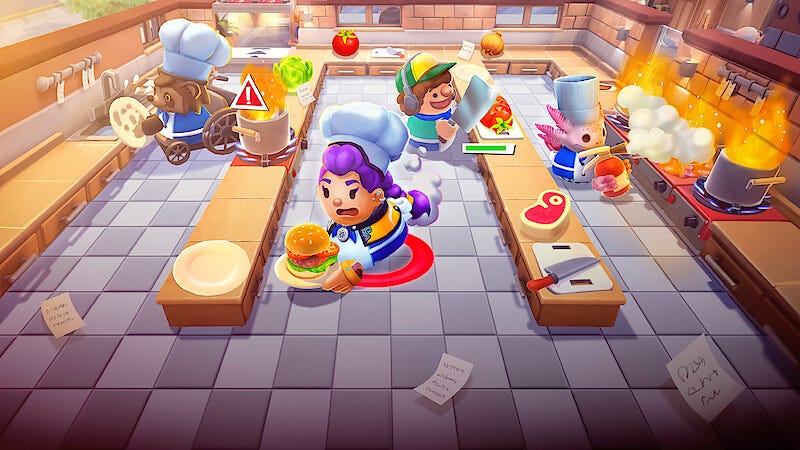
Everything I know about real-world kitchens tells me that the level of focus, collaboration, and high-intensity communication involved in Overcooked is a decent facsimile of the pressure of real restaurant work. Maybe that’s why I was drawn to it in the first place. I love food, so there was always something appealing about working in restaurants. I fantasize about trading in my keyboard and headphones for just this kind of intensely visceral job, one filled with flashing knives, the burn of hot water tested with finger tips, the conspiracy of sweating vegetables and bodies, all of it smothered in sizzles, clinking plates, and shouted orders.
But I’ve been careful not to fall for the romance of it all. I know that for every moment of elation and joy when the kitchen hums– there’s an hour of disarray and abuse, a day of back pain, and a week of frayed nerves. The problem with real kitchens is that the stakes are high and the margins low. Customers must be satisfied, ingredients must not be wasted, your fellow cooks must not be harmed. Those looking for “fun” need not apply.
In the world of Overcooked, however, ingredients never run out, customers never stop coming in (even when you’ve messed up ten orders in a row), and it’s okay for the cooks to die. In fact, the only thing that’s really lost when you slide off the edge of your iceberg kitchen and into the killing cold water below is about five seconds of time and the plate of fish and chips you were carrying. The food, too, lacks preciousness. Infinite ingredients means you chop whatever, put the soup on, and if you find you don’t need it, toss it and move on.
With the sanctity of the customer, the cooks’ safety, and the value of the food stripped away, the Overcooked kitchen becomes the romantic place of my fantasy, a visceral and hyper-collaborative world where all that matters is the puzzle of the recipe in front of you, your rapport with your fellow chef-players, and the joy of cooking. You all win or you all lose, but no one can carry the team. Everyone has to do something, and everyone gets the chance to do some yelling, express some panic and excitement, and feel the rush of success when you put a full plate of food in the order window. It brings the satisfaction I always imagined working in a kitchen would– leaving you and your team sweaty, frazzled, and proud.
Don’t get me wrong, it’s still stressful. But it’s silly stress. It’s chiding your friend who just chopped four tomatoes in a row when all you need is an onion, hollering for someone to wash the plates, your partner yelling “bring that order!” and turning to them to say sweetly, “I can’t, I died.”
It’s not possible to save someone from dying in the game– you just go off the edge of the board and that’s it. There’s an odd relief in that too. There is no “fixing” mistakes in Overcooked, there’s just starting over and doing it again, with no time to waste on making amends or catering to hurt feelings. The intensity is high but the stakes are low, and there’s something wildly cathartic about the shaky relief that comes with running out the clock, and how it keys you up for the next dish, the next level, and the next recipe, thrilled by the prospect of throwing more proverbial noodles at the wall, and finding out whether you’ve cooked them well-enough to make them stick.
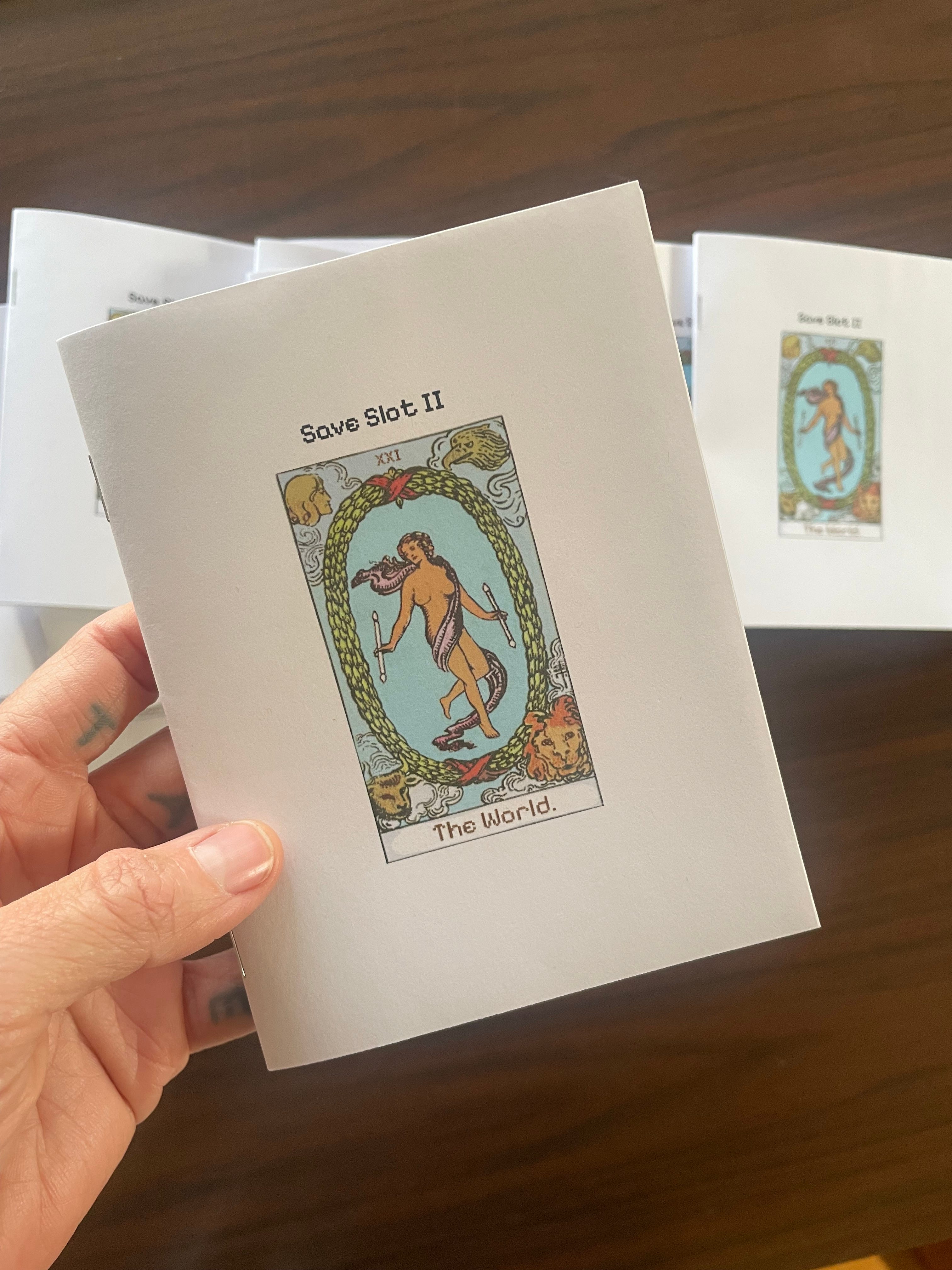
Thanks for reading! I hope this went down quick and easy after a lot of words for a lot of weeks. Also, this essay was originally published in a fabulous little zine about video games by my friend Robin Babb called Save Slot. If you’re interested in learning more/buying issues, do it here. This appeared in Save Slot 2: The World, all the profits from which will go to the Indigenous Environmental Network, a nonprofit organization that supports tribes and other Indigenous communities in their fights to protect "sacred sites, land, water, air, natural resources, health of both our people and all living things." Thanks, as always for all your support :).
the conspiracy of sweating vegetables and bodies…” fantasy for a visceral, sensual, shared…😋
Since I am a 90 second reader audience, I can confess consuming the first few paragraphs. The metaphors resonate with me. Even after 90 second visit I feel like visiting a corner of like-minded spirituality or aesthetics(?).
Imagine showing up in the inspired cook’s kitchen and only having moment to inhale aromas and check out the spices chosen for the menu.