
Hold On
Or, Hope, Most Brutal

Today is the winter solstice. For those of us in the Northern hemisphere, it is the shortest day of the year and the longest night. It’s a day to remember the power of keeping fires lit, of preserving hope even when it’s difficult. In honor of this night, we’re throwing our annual winter solstice party, gathering with friends and loved ones around the hearth, and I, personally, am reflecting on hope— its beauty and its brutality.
This is probably the hardest piece of writing I’ve worked on this year, and personally, the most important.
tw: mentions of suicide
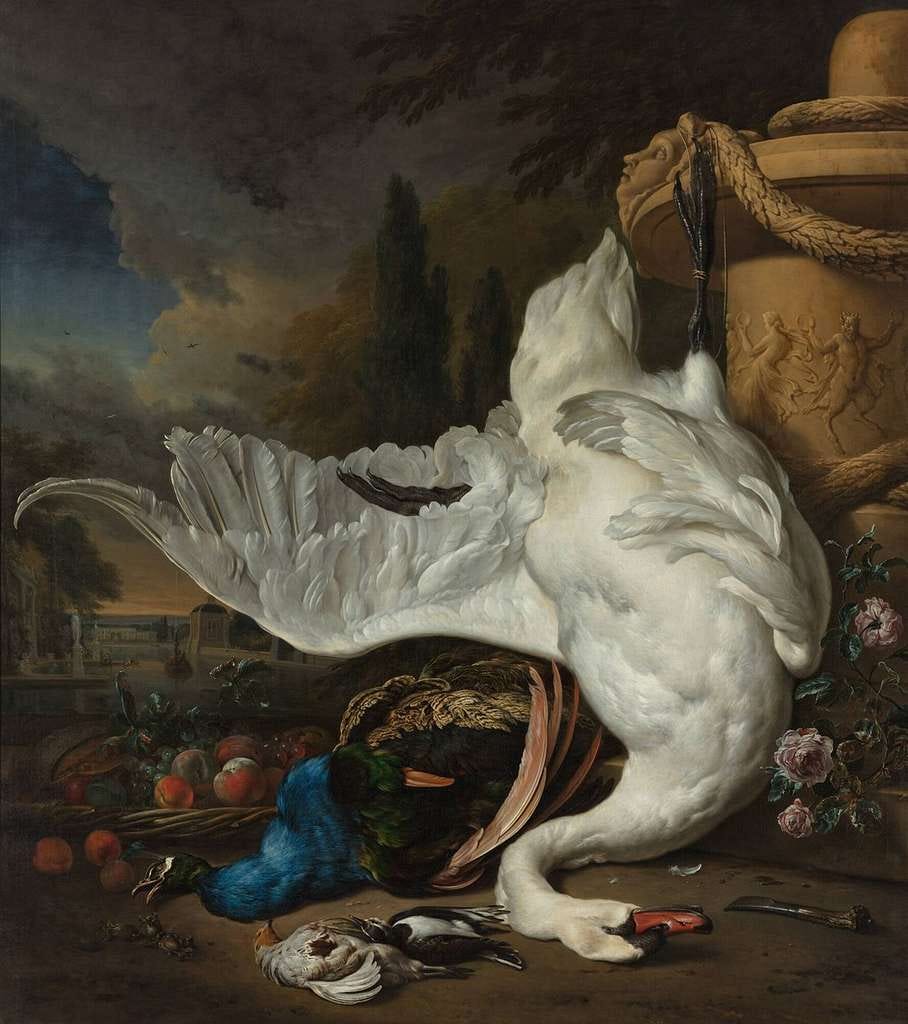
I. We are Not Swans
When I was 16 years old, my best friend died by suicide.
After the wake and the burial, after the turf was laid over the dirt and everyone I knew had stopped thinking about her– I could not.
The only note she left was half-finished, in the trash, and only contained a few lines asking her mom to return her library books. There was no meaning or explanation there.
She’d also sent a message to someone, saying that she wanted a specific song played at her funeral. It was called Swans, by The Format. In desperation, I emailed the band, asking about sheet music for the song. A part of me imagined that whoever was on the other end of that email would not only respond, but that they’d tell me that my friend had reached out to them before she died, that this had all been part of a plan, that she’d entrusted them with a message to explain the unexplainable.
An even deeper, more slippery part of me thought if I could just play the song she wanted us to remember, I would understand… something. Anything. About anything.
Someone from The Format did respond. I think he was the drummer, a guy who’d dropped out of the music scene just after Swans was released. He apologized for my loss, and for the fact that he didn’t have any sheet music for the song. He told me that the piece ended up being the band’s “swan song,” a reference to the folk legend that mute swans sing only once in their life– just before they die. It wasn’t meant to be the band’s last single, but it turned out that way.
For me, the band turned out to be a dead end. And fifteen years ago, when I first received the email, I was discouraged. For a few days maybe, I considered trying to get over the idea that there was more– meaning, reason, something– to the act, the situation, the death.
But I didn’t. I kept going. In the 5,643 days that have passed since she died, not a single one has gone by when I didn’t think about her– her life and her end. Some might call this grief, or something like it. But I wouldn’t call it that.
I think it’s just ordinary, unfashionable hope.
II. Find the Edge
Edge cases have always fascinated me. After all, isn’t an edge case — a very unusual but possible scenario, one that tilts the rules of ordinary life to absurdity — isn’t that the basis of almost every good story?
I once had a long conversation with a statistician about the edge case of all edge cases– the fact that if you flip a coin enough times, eventually the coin will land, not on heads or tails, but on its edge. It’s unlikely, perhaps extraordinarily so, but it’s not impossible.
The road to an edge case, including this one, is difficult to map, because countless unlikelihoods must be achieved in sequence. One way to describe this path is one of “compounding success,” which leads from ordinary circumstances to extraordinary outcomes. Many careers, creations, and particularly memorable lives can be chocked up to compounding successes, but I think this phenomenon might be easiest to understand in literature.
Take, for example, a story where the lord of Mordor, in a very unlikely turn of events, loses the most powerful ring in the world and the meekest of creatures, a hobbit, finds it. Vast armies of darkness are assembled to reclaim it and a tiny fellowship sets out to destroy it for good. Despite heartless and horrifying villainy, our ragtag group seems purpose-built to slip through the fingers of their powerful enemy. Despite losses, they survive, and survive, and survive again. And with a combination of near irrational tenacity and a serious measure of luck, they flip the coin, and it lands on the edge. The ring ends up in Mount Doom, the enemy is defeated. It was never a likely outcome, but it was always, somehow, possible.
This is, of course, The Lord of the Rings, a prototypical story about an edge case, in which the word “hope” appears some 500 times. One telling exchange on the subject is voiced by Gandalf, who wonders about the driving force behind the fellowship and their allies.
“[Is it] Despair, perhaps? Or hope? It is not despair, for despair is only for those who see the end beyond all doubt.”
This is Gandalf’s hope, rooted in knowledge that there is no eventuality beyond all doubt. It takes wisdom and humility to admit that though almost all coins will land on either heads or tails, we know it’s still possible for the next one to land on its edge.
To the cynical, to set your heart on an edge case might seem like a species of misplaced optimism, rather than hope. But they are wrong. Optimism is about weighing odds and finding them favorable. Hope is the opposite. The hopeful know the odds are bad, and yet they know that sometimes, tiny things– gold rings, friendship, courage, love– can tweak circumstances just enough to bring about the near impossible.
But in the meantime, the bad odds take their toll. That’s why the distance between hope and despair is so thin– only as wide as a coin on its edge.
III. Letting Go
By the time I got to college, with Swans by The Format tucked safely in an old playlist, I’d discovered a new song that spoke to my obsession with my friend’s death. “I Cry” by Flo Rida.
This song, with its classic 2010s pop-hip hop club-mix ethos, has an unusual pedigree. The chorus is twice-sampled, originally written for the 1988 Brenda Russel breakup ballad “Piano in the Dark,” then transformed into an EDM remix by Bingo Players to become, “Cry (Just a Little).” “I Cry” pulls in the full Bingo Players electronic chorus, but with Flo Rida’s intimate harmonizing added in. He sings:
I know, caught up in the middle
I cry, just a little, when I think of letting go.
Oh no, gave up on the riddle
I cry, just a little, when I think of letting go.
It took me a long time to understand what these lyrics meant to me. To realize that I “cry, just a little, when I think of letting go” not because of survivors’ guilt, but because I cannot let go. I cry for my best friend, but also for myself, because there is no peace, no letting go for me. Brenda might have “gave up on the riddle,” but that isn’t the same, I’m sure, as letting go.
It reminds me of a quote I once heard about grief carving out a seat in your heart. The idea never seemed quite right to me, because my heart is such a small part of me. How could my lost friend fit on such a tiny seat?
No, my friend and I have long been co-occupiers of my whole body, and this, as much as anything, is why there is no letting go. There is no question of evicting her from one of her last homes on Earth. I’d rather give up all of myself than even contemplate it. And so when Flo says, “I cry… when I think of letting go,” I understand that it’s because to hold on is to sacrifice yourself, and even though it’s worth it, it still hurts.
As the song crescendos, the distorted backup vocals repeat, “I know– I know– I know– I know,” before the bass drops on a final, “when I think of letting go.” I always think of this part as panting breaths, an exhausted acknowledgement of all the things that people tell you about loss and its aftermath.
“I know– it probably wasn’t about me.”
“I know– it’s not healthy to dwell for this long.”
“I know– I have to move on.”
“I know– there’s probably nothing to understand.”
But… Flo says, I say, after all of this knowing. I think of letting go. But I don’t.
IV. And What Do You Sacrifice?
For all that Star Wars is supposed to be a story about hope, that never rang true for me until Andor. This latest installment in the sprawling franchise is nearly unrecognizable from the rest of the IP.
To me, hope is a weapon for underdogs, not the sons and daughters of kings and emperors who are the stars of the nine movies in the primary canon. Each of the three main trilogies center characters that not only have access to extraordinary personal power as once-in-a-generation force users, but they also have access to people with immense personal and social power (Princess Leia, the Jedi Council, Emperor Palpatine, etc.).
The easiest shorthand I can think of for this critique– there are too few normal people in Star Wars. There are no heroic hobbits in this galaxy far, far away.
Andor changed this. Andor tracks the making of the revolutionary Cassian Andor who, after the events of the show, goes on to lead the mission that secures the plans of the death star for the rebellion, setting the stage for the rebel victory in the original Star Wars installment, A New Hope. In showcasing the humble beginnings, the radicalization, the few victories and the innumerable losses of Cassian and his friends, Andor is populated almost exclusively by ordinary people.
And these ordinary people are pitted against extraordinary evil. In season two, Cassian witnesses the Ghorman massacre. He’s in the thick of it, nearly killed again and again. His survival of the initial violence comes down to little more than compounding success. Afterwards, Cassian escapes alone. He tunes the radio to the rebel station, and hears the haunting voice of a Ghorman rebel woman.
“We are under siege,” she shouts to any open channel. “We are being slaughtered. The Imperial murder of Ghorman has begun. Hundreds of murdered Ghorman’s lay dead in Palmo Plaza. Thousands more on the street, more every minute. We are being destroyed.” An explosion and screaming interrupt. “Help us!” she cries again, more desperate. “Is there no one who can help us? Is there no one?”
Cassian’s eyes well with tears, but he does not sob. His face is rigid. He fears that the galaxy will turn away from this violence, pretending it didn’t happen or was deserved. He fears because it happened to him on his planet. He fears because he, himself, is turning away. Not because he wants to, but because there is nothing else within his power to be done.
But there’s something more to this scene and the flinty despair it conjures. It asks us, the watchers, a question. If Cassian is fleeing the planet, saving his own skin and leaving everyone else behind, then why did he turn on the radio?
He knew what he would hear, because moments before he was in the rebel base and he heard this same woman, in person, making these same desperate pleas. So why expose himself to this emotional harm?
Masochistic as it might seem, the act of turning on the radio is, to me, understandable. Cassian chooses to expose himself to this voice, this pain, because this is all there is left to do.
He cannot save the doomed bodies of his allies, but he can give their spirits a home inside himself. He saves them by saving the thing they gave their life for— their fight. He takes it on by listening to their death cries, allowing their struggle to be seared into his soul.
He ruined himself to save the part of them he could.
This. This crumpled and tearstained will to turn on the radio, this is hope. True hope, as Gandalf would say.
From the outside, it looks almost delirious, self-sacrificial– like despair. But it is not that. It is the terrible, heartbreaking courage that says, “I will not go out in a blaze of glory. I will continue on, broken and lonely, because you cannot.”
Some give their lives for the cause. Others sacrifice their death– surviving even when they’d rather not.
“Make it worth it,” Cassian says again and again throughout Andor, and we know he’s asking for all the people sacrificed on the pyre of this hope, including himself.
Perhaps no part of Andor captures that destructive nature of hope like Luthen’s speech at the end of season one.
“And what do you sacrifice?” for the rebellion, he is asked, and answers:
Calm. Kindness. Kinship. Love
I’ve given up all chance at inner peace.
I made my mind a sunless space. I share my dreams with ghosts.
I wake up everyday to an equation I wrote 15 years ago for which there is only one conclusion; I’m damned for what I do.
My anger, my ego, my unwillingness to yield, my eagerness to fight have set me on a path from which there’s no escape. I yearn to be a savior against injustice without contemplating the cost and by the time I look down, there’s no longer any ground beneath my feet.
What is my– what is my sacrifice? I’m condemned to use the tools of my enemy to defeat them. I burn my decency for someone else’s future. I burn my life to make a sunrise I know I’ll never see. The ego that started this fight will never have a mirror or an audience or a light of gratitude. So what do I sacrifice?
Everything.”
There is something about this speech that feels self-indulgent, maudlin even. But also, it feels real.
This is hope at its most brutal.
There’s an instinct, I think, to say that this is not hope. To say that real hope is only beautiful, like a distant, shining star, and any pain we feel in reaching for it is something we do to ourselves.
But that cheapens what hope is.
True hope is not just a pretty glimmer.
Hope is the light through the keyhole, and it’s the knife that cuts away at us until we fit through that tiny opening to the other side.
Hope disfigures and destroys.
To have true hope, especially as Luthen, Cassian, and Gandalf do, hope for change and justice, is to sacrifice everything. The sacrifice and the hope are inseparable– two sides of one coin.
V. Wreck
Not long after I emailed the drummer from The Format, I came across this quote from the Shelley work Prometheus Unbound,
“To love, and bear; to Hope till Hope creates
From its own wreck the thing it contemplates.”
In these lines, it’s easy to focus on hope as an actor, on its supernatural ability to realize its object.
But the part that always struck me was the wreck of it.
Because that is what hope is really like.
A wreck.
When we hope, hope fails, and fails, and fails again to fruit.
Hope fails until we cannot possibly stand to be failed any more, and then it fails again. This is how hope wrecks itself.
And all there is to do is try and endure beyond this wreck.
If you’ve never really borne failed hope, maybe it’s easy to romanticize this struggle. But to those who’ve lost much, hope is not a dazzling light or a sword drawn from a sheath.
Hope is a single match in a blizzard
Hope is a book in your breast pocket in a gunfight.
Hope is a million defeats to one victory.
It’s something, but not much.
VI. We are Swans
I still listen to Swans, sometimes.
It has an unusual chorus, which repeats the phrase “we are not swans” four times, each instance with a different rejoinder, each a rejection of the idea that we were born ugly, like the duckling, yet still insisting that we were meant to be something more beautiful.
“We are not swans,” the lyrics go, “nor are we as ugly as we think we are.” We don’t have to be inheritors of refinement, it argues, to be beautiful. We don’t have to be destined for greatness to be good. We are ordinary and good and beautiful.
At the end, all the instrumentation dies away and the vocalist is quiet, defeated, as he murmurs:
We are swans.
We are flying higher than our counterparts,
we have got each other I’d say that’s enough.
So come on, come on, come on.
That we are swans, in the end, never bothered me. I didn’t care that we reached the beauty that evaded us, a beauty created from the wreck of our ordinariness. Because at some point, my investment in the outcome, my craving to taste the fruit of realized hope, faded away.
Don’t get me wrong, I keep flipping coins, sending emails, and trying to make sense of the senseless, but not because I believe there is an answer.
I gave up on the riddle. But I didn’t let go.
Out here, beyond hope’s wreck, I hope because hoping is what remains of my best friend. Her presence in my life, as manifested in her absence, is hope incarnate. When I hope, I feel her shaping me, even after all this time.
So in the end, I guess, we still have each other, me and her. And here in this wreck of the world we once shared, it turns out– that is enough.
Living is harder than dying, isn't it? Thank you, Sarah, for bringing this one to the page.
Beautiful 🕯️